What Tempe’s Microgrids Masterplan can Teach Other Cities about Designing for Resilience in Extreme Heat
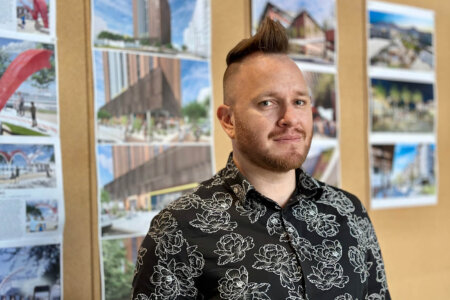
RSP’s National Sustainability and Resilience Director, Linnea Brudenell AIA, LEED AP, shares her take-aways from the practice’s recent involvement in a potent new study into microgrids and what desert cities can do to prepare for weather extremes.
In desert cities like Tempe, Arizona, communities are at the front lines of climate change, facing increasingly violent and extreme weather: flooding and lightning strikes from monsoon storms, dangerous dust-filled haboobs, and extreme heat. These natural disasters affect energy security and challenge community resilience. Compare these challenges to how we, in the design community, often talk about sustainability, centering the conversation on carbon reduction, energy efficiency, and long-term performance metrics. Those priorities matter, of course, but in desert cities like Tempe, they are only part of the picture. Sustainability also must address a much more immediate question: where do people go when the grid fails, natural disaster strikes, and extreme heat becomes a threat to public health?
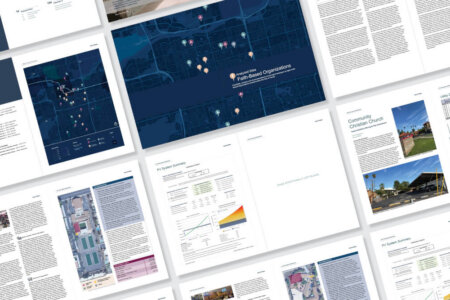
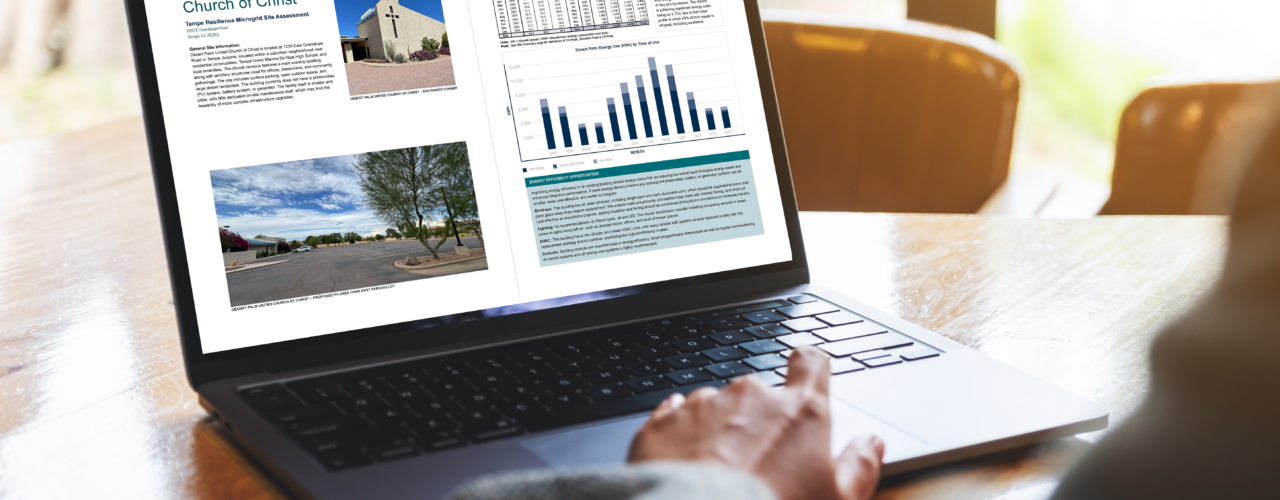
That question is what makes the City of Tempe’s Microgrids Masterplan: Resilient Energy Hubs report so important. RSP, in close collaboration with the City of Tempe, Quest Energy Group, and Solar Island Energy, combined a technical study about power infrastructure with a broader strategy for how cities can respond to climate pressure through design, planning, and community investment. In a region where rising temperatures and energy vulnerability increasingly overlap, the study offers a strong point of view: Resilience should not be treated as a separate layer added after the fact; it should be built into the places people already know and rely on.
The Tempe Microgrids Masterplan Starts with Trusted Community Places
One of the smartest aspects of the Masterplan is that it begins with existing trusted civic assets. The team evaluated 27 facilities across the city, covering community centers, faith-based organizations, police stations, fire stations, and other public-serving buildings. These are already established accessible places embedded in everyday life. Critically, public transit was mapped as well, ensuring vulnerable populations can access the resilience centers. The study reinforces the idea that resilience works best when it strengthens existing community networks. In Tempe, the goal is not to invent an entirely new emergency infrastructure. The plan is to improve the performance of places that residents already trust, allowing them to function as resilient energy hubs during extreme heat events and grid outages.
Designing for Energy Resilience Means Reducing Demand First
A critical strength of the Masterplan is its minimally invasive design logic. Focused on energy efficiency first, the team evaluated options to reduce demand, from evaluating measures for a high-performance building envelope, improved mechanical systems, and upgraded electrical infrastructure, concentrating on reducing baseline loads before sizing renewable energy systems. From there, the study evaluates four resilience strategies across the 27 sites: photovoltaic systems, battery storage, combined solar and battery systems, and backup generators. Rather than forcing one answer onto every facility, the plan weighs the pros and cons of each option based on building conditions, operations, and community function.
Buildings perform best when efficiency and resilience are considered together. A more efficient facility requires less energy to stay cool, which in turn makes every resilience investment stronger and more cost effective. That is a practical approach, but it also reflects a deeper strategic point. Sustainability is rarely about adding one dramatic feature. More often, it comes from aligning building systems, infrastructure, and public need into a coherent whole.
Solar Shading and Heat Mitigation Should Work Together
In a desert city, design often does more than one job, and in the greater Phoenix metro area, the heat island effect is a serious health issue. That is why the Masterplan’s approach to solar infrastructure is especially compelling. Photovoltaic systems are not treated only as renewable energy generators. They are also considered as part of a larger heat mitigation strategy to combat the heat island effect and shade parking areas often left exposed.
When solar is paired with covered parking or shade structures, it reduces surface temperatures and improves comfort in exterior areas that would otherwise intensify the heat island effect. In a city shaped by asphalt, parking lots, and hardscaped public spaces, that kind of intervention has real, practical value. It lowers heat gain while generating power that can support cooling and emergency operations.
Urban Planning for Climate Resilience Requires Better Access
The Tempe strategy includes an urban planning lens. The facility assessments are not limited to building systems alone. They also consider proximity to public transit, neighborhood demographics, public access, and surrounding land use. That is where this project becomes especially relevant to other cities and communities trying to build and encourage climate resilience.
A cooled and powered resilience area, or building, only helps if people can actually reach it. By prioritizing sites in vulnerable neighborhoods and near existing transportation networks, the City is integrating heat response into the daily structure of urban life rather than treating it as a disconnected emergency measure. The priority is to embed solutions within the community fabric, rather than in locations only accessible by car.
That planning perspective makes the strategy stronger and more equitable. It also reinforces the idea that sustainability cannot stop at the building line. The city itself has to be part of the solution, a philosophy City of Tempe officials robustly embrace.
Equity in Extreme Heat Planning Must Shape Design Decisions
Extreme heat does not affect all residents equally. Children, older adults, people with chronic illnesses, outdoor workers, and unhoused populations face greater risk during prolonged heat events. The Masterplan addresses this directly by prioritizing facilities that already support vulnerable groups, including community centers in high-need areas and sites connected to I-HELP, an emergency overnight shelter & daytime resources program provided by Tempe Community Action Agency (TCAA).
The report also accounts for the reality that heat events do not happen in isolation. Power outages, monsoon storms, dust events, and infrastructure disruptions can overlap in dangerous ways. A resilient energy hub has to perform under compounded conditions. By planning for these layered risks, Tempe is building a system that is more realistic and more protective of public health.
What Other Cities Can Learn from Tempe’s Resilience Strategy
The City of Tempe’s Microgrids Masterplan offers real world experience for sustainability and resilience planning in an extreme climate. Extreme heat is often treated as an environmental issue, but this study makes clear that it is also a social issue, a design challenge, an infrastructure issue, and a civic trust issue. The response cannot be limited to policy language, materials selections, or standalone systems and technology, we must include the physical places where communities gather, seek help, and stay safe.
For our team, the real relevance of this work is demonstrating clearly how architecture, energy systems, and urban planning align around a shared public purpose. It argues for a model of resilience that is place-based, performance-driven, and rooted in community access.
In an era of extreme weather, rising heat and growing grid instability, providing a roadmap for resident safety, energy security and community resilience, doesn’t just strengthen public health, it lowers the risk of civic unrest while building trust in municipal governance. The Masterplan is an example other municipalities can replicate and model, connecting and strengthening the existing fabric of our cities while building community resilience for the future, whatever it may hold.
ABOUT THE AUTHORS