
Before You Build: The New California Wildfire Code
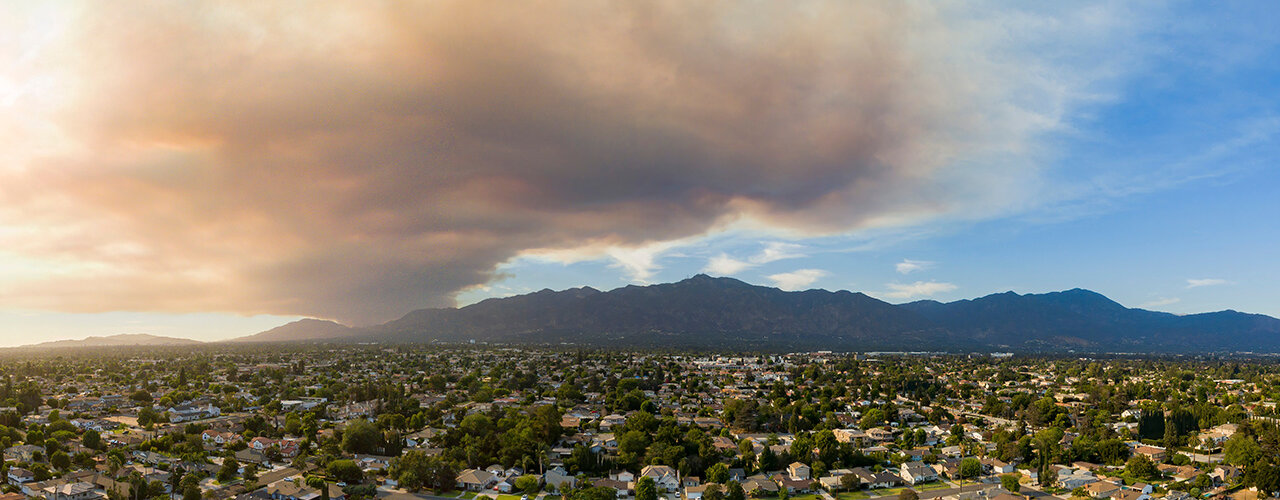
RSP has taken a close look at the new consolidated California wildfire code and offers some insight on how the new regulations may impact your next project, even before a shovel hits the ground.
In January 2025, the Palisades and Eaton fires burned 59 square miles of Los Angeles, killed 31 people, and destroyed 16,246 structures. California’s response was immediate. On January 1, 2026, the State adopted the California Wildland-Urban Interface Code Title 24, Part 7, a new, comprehensive wildfire code that replaces everything that came before it.
This isn’t a paperwork update. It’s a fundamental shift in how we permit, insure, finance and build commercial buildings in California.
What Are the changes?
Previously, wildfire requirements were scattered across four separate code sections. They are now a part of one rigorous directive, the California Wildland-Urban Interface Code (CWUIC), with ‘wildland urban interface’ defined as areas where human development meets or intermingles with undeveloped wildland vegetation. The new code covers everything from site perimeter zones and landscape specifications to exterior wall assemblies, vent sizing, approved materials, and construction methods.
The new code applies to projects in designated High and Very High Fire Hazard Severity Zones (FHSZ), including new construction, renovations that touch the exterior envelope, and, critically, potential sites under evaluation for acquisition.
What are the Implications?
The code aims to reduce the risk of structural fires spreading to wildland areas, enhancing overall community safety and reducing the environmental impact of wildfire smoke and debris. But, while increasing safety, the new mandates will almost certainly drive up construction costs and may also influence insurance availability and property valuations in designated zone. Here are a few areas to consider:
Insurance
Availability and premiums are now tied directly to your property or building’s zone classification and compliance status. Some carriers have withdrawn from California WUI markets entirely.
Financing
Lenders are factoring wildfire exposure into underwriting. Very High FHSZ designation can affect loan-to-value ratios and triggers mandatory disclosure to future tenants and buyers.
Operations
Public Safety Power Shutoff (PSPS) events, when utilities turn off the power as a preemptive precaution during wildfire season, endanger operational continuity.
Construction
Budget a 3–8% cost premium for projects that trigger WUI requirements, before you factor in multi-code coordination complexity.
A Case in Point: Four Codes, One Roof
The new CWUIC doesn’t exist in isolation. Every commercial project in a WUI zone must simultaneously satisfy requirements from multiple, often competing codes. The clearest example: a single fully loaded commercial roof must now reconcile four inter-related directives at once; the new wildfire code, new energy code requirements for commercial properties with integrated solar and battery storage backup, structural requirements including both live loads from fully outfitted firefighters and seismic, snow and wind loads as well as typical dead loads, and MEP/fire protection requirements, each with its own clearances, load calculations, and material constraints.
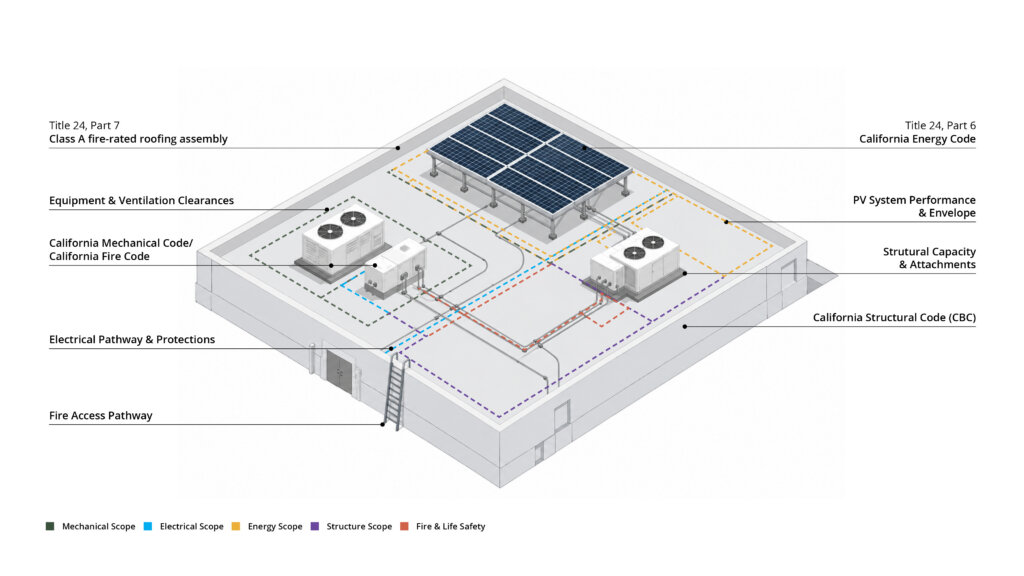
As with any code, the real challenge is not just digesting its content, but in understanding how these new, interdependent rules apply to a specific design or site. Manually navigating this dense new regulatory landscape is complex and time-consuming, potentially turning compliance verification into a potential
major bottleneck.
Now What?
The most expensive decisions in any project aren’t made in construction — they’re made before the first pencil touches paper, at the moment of site selection, when costly risks and exposure can be avoided. At RSP, our approach starts with an understanding of climate resilience, regulatory complexity, and real cost exposure. We don’t treat compliance as a constraint imposed on design, after the fact. We build great design on this foundation.
RSP’s full Client Advisory on Title 24, Part 7 is available for download. It is aimed at commercial, corporate, and industrial clients considering new construction, major renovations, as well as site or property acquisitions in California. It provides context and background on the new requirements, guidelines for site selection, implications for your project, and a structured, eight-step process of due diligence that will help minimize risk and identify compliance challenges before they become major problems.